
Engaging the Complexities of Agency, Voice, and the Climate Crisis in Nature-Based Early Learning: A Three-Paper Dissertation
Situated at the intersection of early childhood education, environmental education, and participatory inquiry, this dissertation investigates the roles of children, educators, and early learning programs in responding to the climate crisis.
Employing the three-paper format, this dissertation interrogates traditional power dynamics in early learning settings, whether between adults and children, or researchers and educators, and proposes participatory, equity-centered approaches that elevate the voices and knowledge of those most directly affected by the climate crisis in the context of nature-based early learning. Each of the papers is described below.
Honoring Children’s Agency: A Systematic Review of Research With and By Children in Environmental Contexts
This paper presents a systematic literature review examining research conducted with and by young children in environmental contexts. This review critically analyzes theoretical and methodological approaches, highlighting strategies that affirm children’s agency and recognize them as active participants in knowledge production and climate-related action. Findings underscore the importance of reflexivity, collaboration, and the creation of co-research cultures that extend beyond data collection.
This solo-authored systematic review is published in the International Journal of Early Childhood Environmental Education and is offered to the field in the hopes of inspiring and supporting research authentically conducted with and by children.
Photo: Secret Forest Playschool
From Inquiry to Action: Leveraging Group Level Assessment to Elevate Teacher Voice
This paper applies a participatory methodology to work with early childhood educators, documenting the adaptation and implementation of Group Level Assessment (GLA) as a framework for collaborative professional inquiry. This work positions teachers as knowledge producers, enabling collective reflection, the co-construction of professional knowledge, and the generation of actionable pedagogical solutions, while also examining the limitations and benefits of participatory methods within early learning settings. Just as children must be taken seriously as co-researchers, so too must educators be seen and respected as knowledge producers.
This paper was co-authored with my Arlitt Center colleagues, Dr. Leslie Kochanowski, Director of Research and Initiatives, and Abraham Underhill, an Arlitt educator. Dr. Kochanowski has been a tremendous thinking partner in practitioner research and the use of GLA to strengthen Arlitt’s practice of professional inquiry. Abraham is a longtime Arlitt educator who exemplifies the best of early childhood pedagogy in his daily practice with young children. It was Abraham’s own professional inquiry into phenology, the study of seasonal changes, that led to the inquiry shared in this paper.
This paper is published in the Journal of Practitioner Research. A practitioner companion article is published in Exchange Press.
Weathering the Storm: An Exploratory Survey Study of Climate Change Impacts and Adaptations in Nature Preschools
The third paper explores climate-related impacts and adaptations in nature-based preschools through a national survey of programs. This paper reports findings from a broader mixed-methods inquiry using survey data to establish a baseline understanding of climate impacts on nature preschools and GLA, and to generate climate-resilient pedagogies and approaches grounded in the lived experiences of nature preschool educators and children, which will be reported in future publications.
Findings from the survey portion of the study are shared in this chapter and reveal how climate events disrupt daily programming, reduce time spent outdoors, and affect land, health, and program morale, underscoring the need for climate-informed guidance, infrastructure, and professional support to sustain equitable access to nature-based learning for all children. This paper is coauthored with my Arlitt Center colleagues, Dr. Ann Rossmiller and my dissertation chair, Dr. Victoria Carr. Dr. Rossmiller provided invaluable guidance on the survey construction and statistical analysis, and Dr. Carr provided foundational support in the conceptualization and implementation of this study.
This research was made possible by the University of Cincinnati University Research Council Summer Research grant. This paper is currently under review.
Dedication
For Elba, Molly, and Teddy.
and for all children:
May you always know the earth loves you.
“Knowing that you love the Earth changes you, activates you to defend and protect and celebrate. But when you feel that the Earth loves you in return, that feeling transforms the relationship from a one-way street into a sacred bond.” (Kimmerer, 2013, p.124)
Acknowledgments
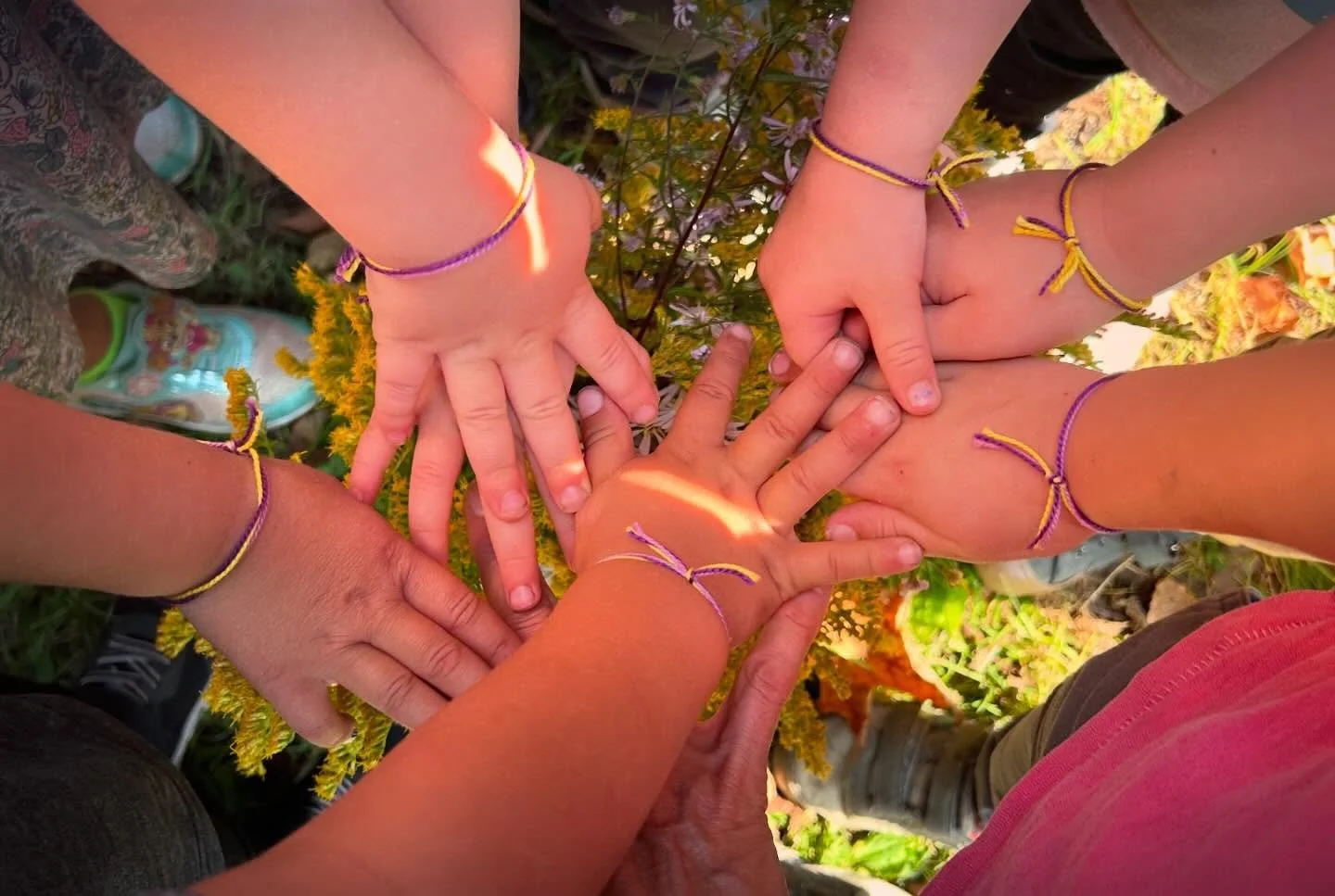
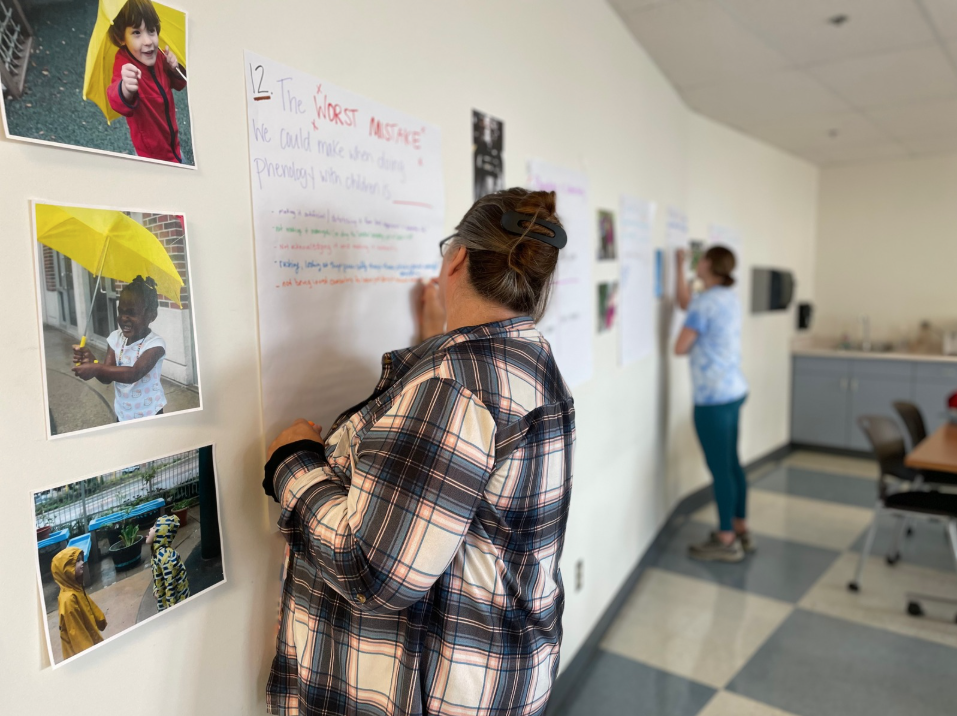
Photo: The Arlitt Center
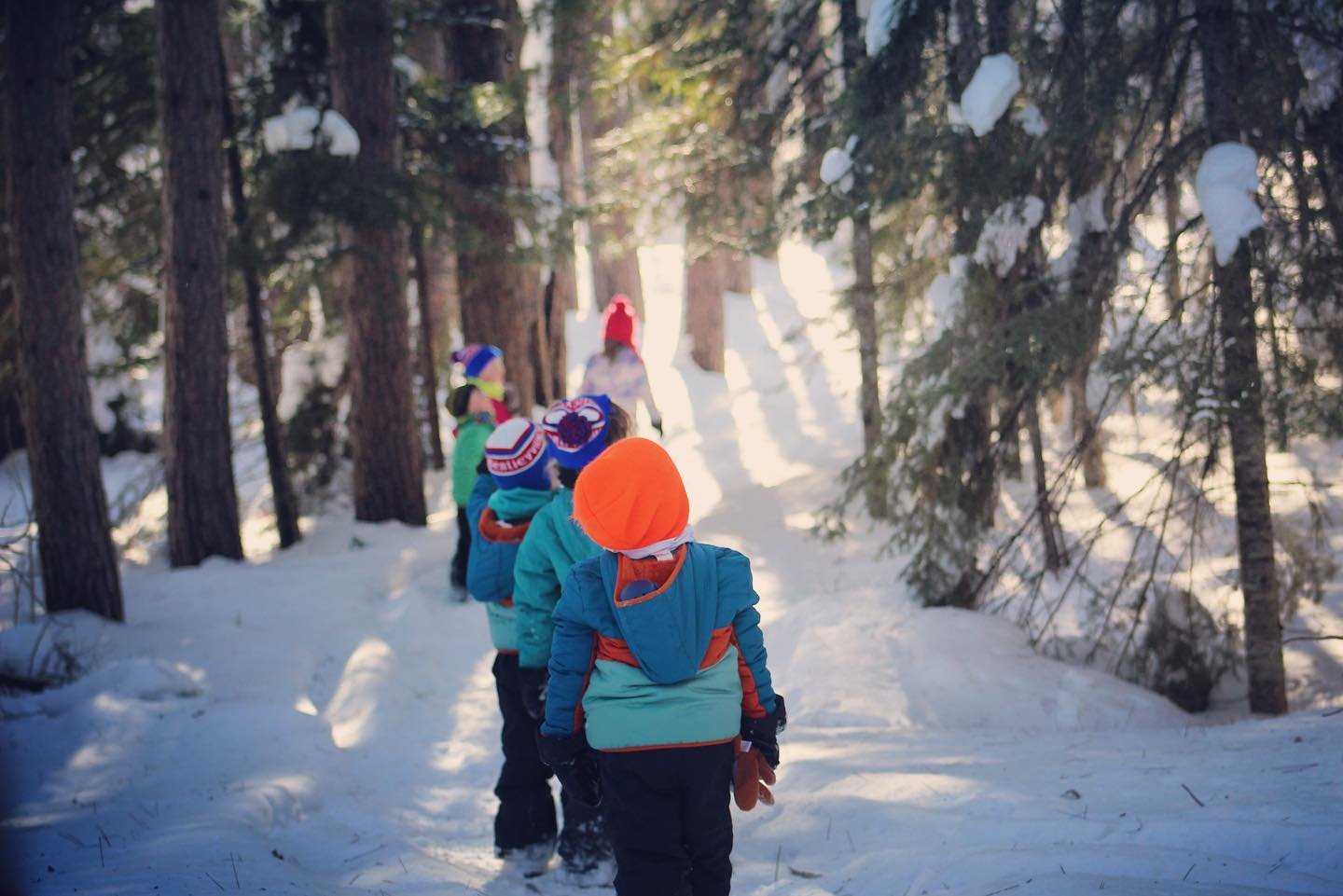
Photo: Secret Forest Playschool
Every learning carries a lineage. I am immensely grateful to situate my work in a lineage of brilliant and generous mentors, scholars, and communities who have shaped not only my work, but my life. First and foremost, I give deep thanks to the Land. Completing my dissertation at home in Minnesota has been incredibly grounding. Gitchigumi (Lake Superior) has been one of my greatest teachers: vast and powerful, constantly awe-inspiring, demonstrating endurance and resilience in every season.
To my chair and advisor, Dr. Vicki Carr for saying yes to me as your “last in” doctoral student, for pushing me to design a rigorous study that will make a real contribution to our field, and for all your feedback and guidance along my doctoral journey. To my committee: Dr. Kimberley McCormick for your invaluable guidance on my survey study, and Dr. Helen Meyer for fielding countless IRB questions. And together as a committee for seeing the trajectory of my work, affirming my identity as a scholar, and not only supporting but championing my ambitious timeline!
To my University of Cincinnati community: Dr. Mark Sulzer - much of the work undertaken in my independent study has found its way into these pages. The questions you’ve posed have shaped my scholarship in more ways that I can count. To Dr. Rhonda Brown - your early feedback on chapter 2 improved its conceptual coherency immeasurably, thank you. To Dr. Lisa Vaughn thank you for generously sharing your abundant wisdom about participatory methodologies - I use what you’ve taught me daily. To Dr. Stephanie Reid for the time, attention, and care you gave to my writing and work, for your infectious energy, and for your commitment to honoring children and educators. To my luminous writing friends: Amy, Vicki, Maddie, & Eunique. I have loved journeying alongside you. Thank you for your support, solidarity, and brilliant scholarship.
To my Arlitt Center colleagues: Dr. Leslie Kochanowski, brilliant collaborator and friend: working together has been such a place of inspiration and grounded energy. And Dr. Ann Rossmiller, I so appreciate your pragmatic, get-it-done approach. Thank you for your patience with me wading into quantitative analysis, and for encouraging me to keep thinking qualitatively about our findings. To Abraham Underhill, your commitment to nature-based learning and passion for phenology is contagious. I have so enjoyed our work together and am constantly impressed by your dedication, creativity, and curiosity. And to all the incredible Arlitt educators, especially Mary Beth Wright and Rachel Konerman, thank you for welcoming me into your center and your practice. I am grateful to play a small part in sharing the brilliant work that you do with our wider field.
To my University of Minnesota Duluth colleagues & mentors: Dr. Julie Ernst, I truly would not be here if not for you - your tenacious advocacy for this work and our field is something I aspire to. To Dr. Ken Gilbertson, your rigor and unending curiosity have forever shaped my life, teaching, and scholarship (thanks for always encouraging us to get outside and remember why we do this). To Dr. Thelma Nayquonabe words cannot express how grateful I am that our lives are now intertwined; my life is forever changed because of all you’ve taught me. Chi miigwech, nindaangwe. To my dear community of practice colleagues, you live this work and I am honored to walk alongside you. Thank you for trusting me with your stories, they inspire me daily. To my Environmental Education and Childhood Nature Studies students - it is a total joy and honor to learn alongside you.
To my family and friends, thank you for seeing me, celebrating me, and supporting me as I carved out space and time to do this work. I hope you know that this is for us all. To Scout, my near constant companion and one of my greatest teachers - who true to form interrupted the writing of these acknowledgments for a play break. Most of all to Wade, you saw this path for me long before I could imagine it for myself. Your love makes everything possible.